


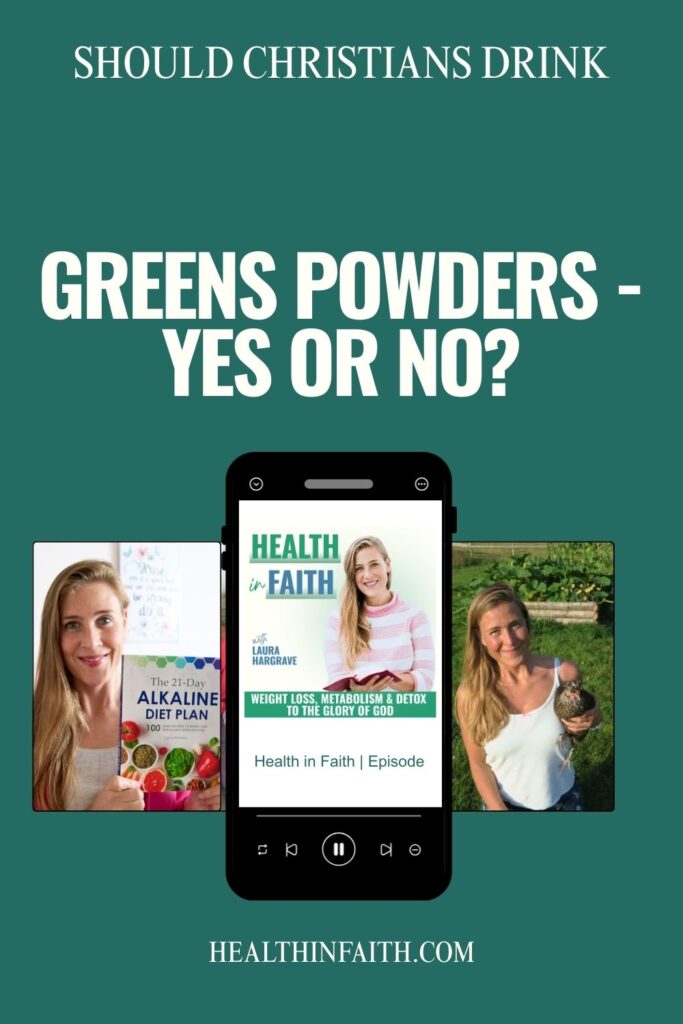
Ep 17 | Should Christians Drink Greens Powders? Biblical Wisdom


Most Christian women want to nourish their bodies well, but the wellness world can feel overwhelming—especially when every influencer is promoting a new supplement, powder, or “miracle blend.” A question I often get from my Christian clients is: “Should I drink a greens powders?”
This episode of the Health in Faith podcast and blog explores that question from two angles:
1. Nutritional science
1. Biblical wisdom and stewardship
Because as Christian women, we’re not just chasing wellness trends, we’re seeking discernment, clarity, and peace in how we fuel our God-designed bodies.
What Are Greens Powders? (A Simple Breakdown)
Greens powders are usually blends of dried and powdered plant foods such as:
- Spirulina
- Chlorella
- Wheatgrass
- Barley grass
- Broccoli extract
- Digestive enzymes
- Adaptogens (like ashwagandha)
- Probiotics
If you scroll through Instagram, watch YouTube wellness videos, or wander the aisles of any health store, you’ll see greens powders everywhere—little green scoops promising big results. More energy. Better digestion. Glowing skin. Balanced hormones. Less stress. Weight loss. Immunity support. And more vegetables in your day without even picking up a knife.
For people who are busy, tired, overwhelmed, and trying to honour God with their health, greens powders can feel extremely tempting. They look like a shortcut to wellness. A quick way to feel “back on track.” A small decision that might finally spark momentum.
But the real question we should ask is: Should I be drinking greens powders? Do they align with Biblical wisdom and the way God designed our bodies? And what does science actually say—not influencers, not marketers, not paid testimonials, but real research?
Let’s dig deeper and look at greens powders with honesty, clarity, and the kind of calm, grounded perspective that comes when you pair Scripture with nutrition science.
At their core, greens powders are powdered blends of vegetables, grasses, seaweeds, herbs, probiotics, enzymes, and sometimes added vitamins. Think spirulina, wheatgrass, kelp, chlorella, spinach, dandelion, turmeric, digestive enzyme blends… all dried, ground, and mixed into a fine powder. When you stir it into water, you get a concentrated burst of plant-derived compounds.
That sounds great in theory, but it’s important to say the obvious: greens powders are not the same as vegetables. They don’t give your gut the fiber God designed to feed your microbiome. They don’t offer the water content your cells thrive on. They don’t give you the chewing, the fullness, the digestive activation that whole foods trigger. And no powder in the world can replace the nutrient synergy of actual plants—synergy that multiple research papers confirm is lost when foods are dehydrated and isolated.
One review published in Food Reviews International noted that processing and drying alter the phytochemical content of vegetables in significant ways, reducing vitamin C, decreasing polyphenols, and changing antioxidant activity. This doesn’t make greens powders useless, it just means we shouldn’t treat them like veggie replacements.
Still, some ingredients commonly found in greens powders do have real research behind them. Spirulina, for example, has been widely studied for its antioxidant properties, potential to support immune function, and nutrient density. A review from Martins et al. (2016) noted that spirulina contains iron, antioxidants, magnesium, and certain bioactive compounds that may support metabolic health. Chlorella has been researched for potential detoxification support, especially binding heavy metals in controlled clinical settings. And wheatgrass has shown small immune benefits in certain studies.
But here’s the nuance: the amounts used in research are often far higher than what appears in most greens blends. Many supplement companies use proprietary blends—which means they don’t disclose the exact amounts of each ingredient. You might see “Spirulina 500 mg” on a label… but the study that showed benefits used 3,000–5,000 mg daily. That gap matters.
As a Christian, this is where biblical wisdom becomes our anchor. God never called us to outsource the design He built into food. He called us to stewardship, intentional nourishment, and discipline—not shortcuts disguised as superfoods. Scripture reminds us again and again that God’s design is complete, not incomplete. His foods are full of life, meant to be experienced in their real form.
Psalm 104:14 says, “He makes grass grow for the cattle, and plants for man to cultivate—bringing forth food from the earth.”
God invites us to cultivate, not just scoop. To slow down, not just swallow. To partner with His creation, not bypass it.
So the question becomes, not “Is a greens powder sinful?” of course not. But rather, “Am I using this as support—or as a substitute for caring for myself in the way God intended?”
There are seasons when a greens powder genuinely helps. If your digestion is sensitive, if life is chaotic, if you’re recovering from illness, if you’re traveling, if produce is expensive or limited, or if your appetite is low—these powders can provide a gentle bridge.
But they cannot build the foundation.
This is why, when clients do want to add a greens powder, I point them toward ones that are tested, transparent, and simple. A product I like and have used for years is AG1, because it publishes third-party testing, offers a comprehensive micronutrient profile, tastes great (the best flavour of all greens powders I’ve tried, hands down) and includes probiotic strains with clinical backing. If someone is going to use a greens supplement, I’d rather they choose one that’s thoroughly vetted rather than low-quality powders full of fillers, mystery herbs, or questionable dosing.
If you personally want to try AG1, there’s a seasonal welcome kit available right now that includes a canister, shaker, Vitamin D3+K2, and a £/$20 discount. It’s absolutely optional—but if you’re looking for a safe and reputable greens powder, this is one I feel comfortable recommending.
But remember: this is support, not salvation. A tool, not a requirement. A bridge, not the road.
If you like greens powders and they genuinely help you—wonderful. Enjoy them as a bonus, not a crutch. And if you don’t like them, or you can’t tolerate them, or they feel like another thing you “should” do—you’re not missing out. You can absolutely live a vibrant, nourished, God-honouring life without ever using a green scoop.
A little blog bonus for you (not in the podcast): Not all greens powders are actually “greens.” Some brands add adaptogens like ashwagandha, which may interfere with thyroid function in sensitive individuals. Others add detox herbs like milk thistle, burdock, or dandelion root, which can interact with medications. Always check for adaptogens, hormone-acting botanicals, and high-dose herbal compounds before choosing a powder. For many women, the greens blend isn’t the issue—it’s the hidden extras.
The truth is simple: God didn’t design our bodies to thrive on powders. He designed them to thrive on plants, protein, sunlight, movement, community, rest, and peace. Greens powders can help you in certain seasons, but they’re never required for a healthy Christian life.
If you want help choosing a safe option, or you want a faith-rooted nutrition plan that helps you build whole-food rhythms with peace and grace, I’d love to walk with you. Your body is God’s creation, and it deserves both wisdom and kindness.
3 Things Christians Must Consider Before Using a Greens Powder
1. Biblical Stewardship: Are You Using Greens Powders to Support Health—or Replace Wisdom?
One of the greatest dangers of the wellness world is not the products—it’s the mindset behind them.
Some Christians reach for supplements because:
- “I don’t have time to eat properly.”
- “I want a quick fix.”
- “I hope this powder will help me lose weight fast.”
But Scripture repeatedly warns us about shortcuts and quick fixes:
“The plans of the diligent lead surely to abundance.” — Proverbs 21:5
God calls us to diligence—not desperation.
Greens powders can support health, but they cannot replace:
- real food
- balanced meals
- hydration
- sleep
- movement
- emotional rest
- stewardship through discipline
A supplement cannot heal what a lifestyle refuses to address.
Greens powders are helpful when used as a tool, but harmful when used as a substitute.
What the science says:
Multiple large reviews, including analyses from Harvard School of Public Health and NIH Office of Dietary Supplements, conclude that while green supplements offer nutrients, they cannot replace the completeness of whole foods, especially in fiber, phytochemicals, and nutrient synergy.
Real food > powdered food — every time.
2. Nutritional Value: Are Greens Powders Actually Effective?
Here’s where clarity matters.
Not all greens powders are equal quality.
Potential Benefits (According to Research)
1. Antioxidant Support
Many powders contain spirulina, chlorella, and wheatgrass—ingredients shown in published research to support antioxidant activity and reduce oxidative stress.
For example:
- Spirulina has been studied for its potential effects on inflammation markers and antioxidant boosting.
- Chlorella may support immune function and detox pathways.
2. Gut Health Support
Probiotics in some blends can help rebalance gut flora, which is essential for metabolism, mood, and hormone balance.
3. Filling Nutritional Gaps
Most women do not meet the recommended daily intake of vegetables.
A greens powder can help fill gaps, especially during:
- Busy seasons
- Travel
- High-stress periods
- Low appetite phases
- Post-illness recovery
Limitations You Should Know
1. Low Absorption for Some Nutrients
Powdered greens often contain forms of minerals that are poorly absorbed. The body always absorbs nutrients better from whole foods, partly because of fiber and phytochemicals.
2. Not a Complete Vegetable Replacement
Studies across nutrition journals emphasize that greens powders do not provide:
- full-spectrum fiber
- full nutrient synergy
- long-term satiety benefits
3. Possible Additives
Some brands contain:
- synthetic sweeteners
- inflammatory gums
- cheap fillers
- flavor enhancers
Always read ingredient labels with discernment.
3. Christian Discernment: Are You Choosing From Wisdom or Marketing Pressure?
Christians are called to test everything (1 Thessalonians 5:21). That includes supplements.
The wellness industry is a multi-billion dollar market, and much of it runs on fear-marketing:
- “You don’t get enough nutrients.”
- “Your body can’t detox itself.”
- “You’ll gain weight without this supplement.”
But the truth?
God already designed your body with incredible detoxification systems:
- liver
- kidneys
- lymphatic system
- gut
- skin
You may support these, but you do not need powders to make them function.
Red flags to watch for in any greens powder brand:
- Excessive claims
- “Detox” or “fat loss” promises
- No third-party testing
- Artificial sweeteners
Green flags to look for:
- Transparent labeling
- Evidence-based ingredients
- No artificial additives
- Third-party tested
- Clear dosing amounts
- Clinically effective ingredient quantities
So… Should Christians Drink Greens Powders?
YES — if:
✔ you want extra nutrient support
✔ you understand it’s a supplement, not a replacement
✔ you choose a clean, clinically-backed brand
✔ you use it to fill nutritional gaps, not fix poor habits
✔ you make the decision prayerfully, not reactively
NO — if:
✘ you’re using it as a quick fix
✘ you’re hoping it will replace meals
✘ it becomes an idol, obsession, or source of fear
The Bible never forbids supplementation—but it repeatedly warns against bondage, obsession, neglect, and misplaced trust.
BLOG BONUS: 10 Ingredients to Avoid in Greens Powders
…and why they matter for Christians who value stewardship of their body.
If you’re considering a greens powder, one of the most loving and wise things you can do for your body—the temple of the Holy Spirit—is learn what not to put into it. Not all greens blends are created equal, and many cheaper or aggressively marketed formulas hide behind “proprietary blends” that make poor-quality ingredients look cleaner than they are.
Here are 10 ingredients to avoid, and the clear reasons they don’t serve your health or your calling:
1. Spinach!
This is a major red flag. Spinach is high in inflammatory oxalates and concentrated amounts can wreak havoc on your body. You may be surprised to learn this, but don’t dismiss it. If you want more info on the dangers of oxalates, I recommend reading Sally K Norton’s great book ‘Toxic Superfoods’.
2. Maltodextrin
A cheap filler often derived from corn (frequently GMO) that spikes blood sugar faster than table sugar. The last thing a greens powder should do is create metabolic chaos.
3. Artificial Sweeteners (Sucralose, Acesulfame K, Aspartame)
These can disrupt the microbiome, trigger headaches, and confuse insulin signaling. They also work against the “natural, creation-rooted” purpose of a greens formula.
4. Added Sugars or Syrups
Some powders include fructose, tapioca syrup, glucose, or even “organic cane sugar.” Even organic sugar is still sugar—and sugar inflames, ages, and depletes.
5. Synthetic Vitamins (esp. folic acid instead of methylated folate)
Synthetic B-vitamins can cause issues for people with MTHFR variants, and they reflect a formula built for cost, not health.
6. Cheap Algae Sources (Non-Certified Spirulina/Chlorella)
Low-grade spirulina or chlorella can contain heavy metals or microcystins (liver toxins). Choose only products with third-party purity testing.
7. Silicon Dioxide & Other Flow Agents
Not the worst toxin, but unnecessary. High-quality brands don’t need anti-caking agents to keep the powder from clumping.
8. “Natural Flavors” (Undisclosed)
This umbrella term can include solvents, preservatives, and flavoring chemicals. If a brand won’t disclose their sourcing, that’s not transparency.
9. Herb Extracts Not Suitable for Long-Term Use
Examples: senna, rhubarb root, high-dose alfalfa, or laxative herbs. These can irritate the gut or interact with medications. Daily greens shouldn’t act like a colon cleanse.
10. Green Tea Extract (High Caffeine)
Caffeine-inflated blends can cause jitters, anxiety, elevated cortisol, and heart palpitations—disguised as “energy.” If you want energy, nourish your mitochondria, don’t overstimulate them.
Is AG1 a Good Option? My Honest, Professional Christian Perspective
AG1 is one of the few brands that meets the standards I listed above:
- Third-party tested
- Transparent labeling
- No artificial sweeteners
- Contains gut-supportive probiotics
- Includes athletes-tested certification
- Uses real plant-based ingredients
It’s not a magic bullet, it’s simply a high-quality, helpful support tool during busy seasons.
Optional Seasonal Offer (Gentle CTA)
If you choose to try it, AG1 currently offers a Seasonal Welcome Kit that includes:
- Free canister
- Free shaker
- Free Vitamin D3+K2
- £/$20 discount on your first order
There’s no pressure—just a resource if you feel it would bless your health routine.
Scientific References
Guine, R. P. F., et al. (2019). The impact of food processing on the nutritional quality of foods: A review. Food Reviews International, 35(7).
Martins, N., et al. (2016). Nutritional and nutraceutical applications of Spirulina: A review. Food Chemistry, 188, 27–36.
Safi, C., et al. (2014). Morphology, composition, production, processing, and applications of Chlorella: A review. Renewable and Sustainable Energy Reviews, 35, 265–278.
Gershwin, M. E., et al. (2008). Spirulina in human nutrition and health. CRC Press.
Finley, J. W., & Given, P. S. (2020). Functional foods and their role in health and disease. Journal of Food Science, 85(8).
Leave a Reply
I'm so glad you're here
For health tips, inspiration & insights - to equip you to thrive in our uncertain times- follow me on Insta @lauranutritionist


TUNE IN NOW
Health in Faith Podcast has now launched!