


28 | All Roads Lead to Metabolism 1/4 – 5 Lies Keeping You Tired All the Time
Do you ever feel like no matter what you do, you’re tired all the time? Your energy crashes by mid-afternoon, your belly fat won’t budge, and your mind is clouded with brain fog? If this sounds familiar, let me assure you: it’s not random. It’s metabolic.
Welcome to the first part of my four-part series, “All Roads Lead to Metabolism”, where we uncover the root causes of persistent fatigue, stubborn weight gain, and low energy—and learn how to reclaim your vitality. I’m Laura Hargrave, master certified nutritionist, bestselling author, and health coach. For over 20 years, I’ve guided believers like you to live vibrant, spirit-led lives through practical health habits that actually work.
In this episode, we’re focusing on the five lies the enemy tells you that keep you tired all the time. These lies aren’t just mental—they have real metabolic consequences. Understanding and correcting them is your first step toward energy, clarity, and strength.
Metabolism is often misunderstood. It’s not just about calories in and calories out or trying to look a certain way in a swimsuit. Your metabolism is how your body converts food into energy, how it burns fat, and how it regulates hormones that impact mood, focus, and overall vitality. When your metabolism is off, it’s not just your body that suffers. Your mind becomes foggy, your motivation dips, and your ability to serve God and live out your purpose is compromised.

Research shows that metabolic dysregulation—especially issues with blood sugar, insulin sensitivity, and hormonal balance—directly affects cognitive function, energy, and mood (American Diabetes Association, 2022; McKeown, 2021). The good news? Your metabolism can improve at any age. Whether you’re premenopausal, navigating menopause, or postmenopausal, science shows that insulin sensitivity, energy production, and metabolic flexibility are adaptable with the right strategies (Kim et al., 2019).
Lie #1: “It’s the Menopause”
Many women assume that menopause is a free pass to fatigue, weight gain, and metabolic slowdown. Hormones do shift, yes, but menopause is not a life sentence. I have friends and clients who have literally sailed through menopause without energy crashes or stubborn belly fat.
One friend in her early 60s looks about 45, has amazing energy, and maintains a lean, healthy body. When I asked her if she had any issues during menopause, she said, “Nope, I sailed through.” The difference? She’s intentional about her metabolic health and isn’t accepting lies that keep her stuck.
Focusing on blood sugar regulation, strength training, and adequate protein intake can offset many menopause-related metabolic changes (Toth & Tchernof, 2000). For example, women who maintain consistent protein throughout the day preserve lean muscle, which supports insulin sensitivity and energy production. As an extra tip not in the podcast, consider intermittent movement breaks every 60–90 minutes. Even 5–10 minutes of walking or stretching can enhance glucose uptake in muscles and help stabilize energy levels throughout the day (Colberg et al., 2016).
Lie #2: “I Barely Eat Anything”
This leads us to the second lie: “I barely eat, so why am I gaining weight?” I hear this from clients all the time. They assume they’re eating very little, yet they’re struggling with weight gain. Often the reality is different. Many are skipping meals, not eating enough protein, and then compensating with high-carb evening meals or desserts. I had a client who ate almost nothing all day while teaching hundreds of students, standing on her feet, managing stress, and then came home to a large pasta dinner followed by ice cream. Even if her total calories were over 2000, the timing and composition of her meals were sabotaging her metabolism. Coupled with the stress-induced cortisol, her body held onto fat and energy dipped.
If this resonates with you, I always suggest tracking your food intake for a week using MyNetDiary. This will help you spot nutrient gaps, see where you might need extra minerals or protein, and ensure your diet truly supports your metabolic health goals. Sign up here for free: https://www.mynetdiary.com/ Use code: ICEJEI during signup to get the premium version which gives more options and enables you to scan foods. Many people underestimate what they eat or misinterpret their eating habits. Tracking will reveal hidden patterns—like skipping protein in the day, excess evening carbs, or long periods without fuel—that can be corrected to stabilize energy and promote fat loss. Even if you only track for one week, it’s eye-opening and often life-changing.
Lie #3: “I’m too tired to exercise”
Fatigue and that ‘tired all the time’ feeling is often a symptom of blood sugar dysregulation, not a reason to remain sedentary. The enemy wants you to think you can’t move, but the truth is that movement energizes the body and stimulates metabolism. You don’t need gruelling gym sessions. NEAT—Non-Exercise Activity Thermogenesis—means everyday movements like vacuuming, gardening, walking, or stretching count as metabolic activity. Even 10–20 minutes at a time can kickstart energy. For women over 40, incorporating micro-exercise sessions with resistance bands or bodyweight movements can enhance muscle mitochondrial density, which improves cellular energy production and metabolic flexibility (Holloszy, 2005). So even when you feel drained, gentle, purposeful movement is restorative.
Lie #4: “I’ve tried everything, nothing works”
Many women believe they’ve exhausted every strategy for weight loss and energy, yet the missing piece is often consistent blood sugar stabilization. Have you ever observed your energy levels after meals, monitored post-meal blood sugar spikes, or followed a structured metabolic routine for 8–12 weeks? Consistency is key. Even small changes—balanced meals with protein, fiber, healthy fats, and movement—recalibrate your metabolism over time. An extra, practical tip is to experiment with a 5-day metabolic reset: whole foods, no refined carbs, and three balanced meals per day. Track energy and hunger cues—it’s amazing how quickly your body responds once you stabilize blood sugar.
Lie #5: “I’m just not designed to be slim or energetic”
This is as much a spiritual and mental roadblock as a metabolic one. Comparing yourself to others or resigning to low energy patterns reinforces these metabolic lies. Replace this thought with, “I can do all things through Christ who strengthens me.” A faith-aligned approach to metabolic tracking—journaling your meals and energy while integrating prayer or meditation—reinforces both mental and physiological awareness. Studies show that mindfulness and intentionality improve eating behaviors and metabolic outcomes (Loucks et al., 2015). Your mindset isn’t just motivation—it’s metabolic fuel.
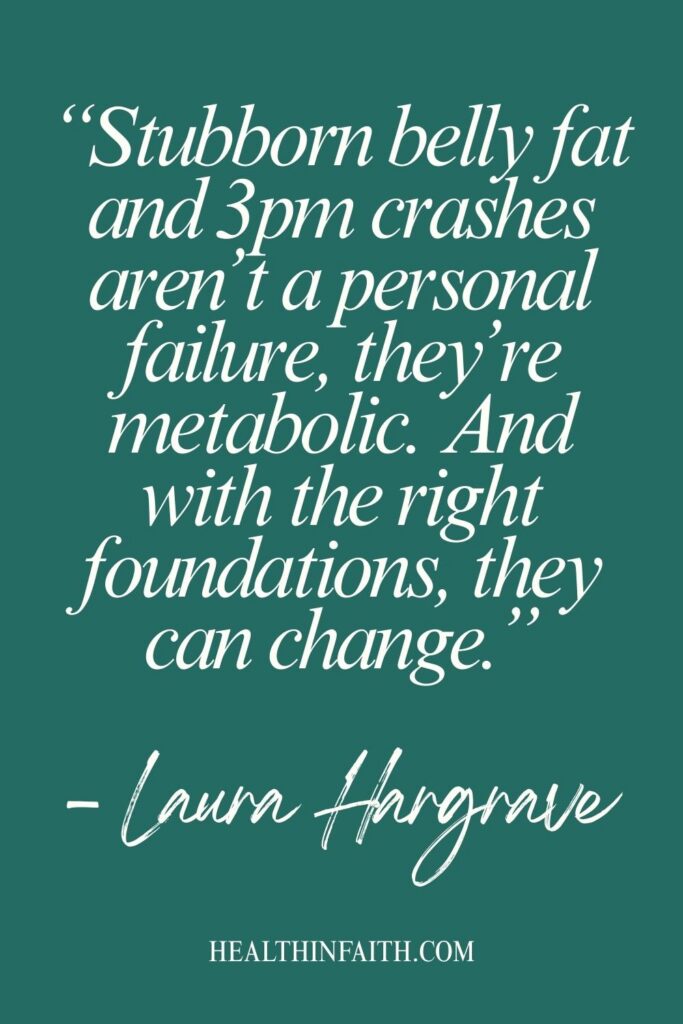
Feeling tired all the time, battling stubborn belly fat, or struggling with brain fog isn’t your fault. It’s a signal from your body that your metabolism needs attention. By identifying these five lies and implementing small, consistent changes, you can reclaim energy, focus, and vitality—without extreme diets or gruelling workouts. Addressing metabolism doesn’t just improve your health—it empowers you to serve God with clarity, energy, and joy. Start small, be consistent, and trust that change is possible at any stage of life.
To get started, I’ve created a free Faith-Aligned Four-Step Metabolic Health Guide designed for Christians who want to restore energy, stabilize hormones, and feel at home in their bodies. It takes just 5–8 minutes to read and applies 20 years of metabolic research in a simple, actionable framework. Grab it here: healthinfaith.com/guide
References
American Diabetes Association. (2022). Standards of Medical Care in Diabetes – 2022. Diabetes Care, 45(Supplement 1), S1–S264.
Colberg, S.R., et al. (2016). Exercise and Type 2 Diabetes: The American College of Sports Medicine and the American Diabetes Association joint position statement. Diabetes Care, 39(11), 2065–2079.
Holloszy, J.O. (2005). Exercise-induced increase in muscle insulin sensitivity. Journal of Applied Physiology, 99(1), 338–347.
Kim, J.Y., et al. (2019). Metabolic Health in Midlife Women: The Role of Diet and Physical Activity. Menopause, 26(9), 1023–1032.
Loucks, E.B., et al. (2015). Mindfulness-Based Interventions and Metabolic Outcomes: A Review. Obesity Reviews, 16(11), 972–985.
Toth, M.J., & Tchernof, A. (2000). Effects of Menopause on Body Fat Distribution and Metabolism. Current Opinion in Clinical Nutrition and Metabolic Care, 3(6), 451–456.
Resources, Links Mentioned
🌟 Special Offer: Book a 60-Minute Nutritional Metabolic Breakthrough Consultation → https://healthinfaith.com/breakthrough
👉 Health for Life – 6 Month Programme for Christians to Heal, Thrive & Restore Metabolic Health → https://healthinfaith.com/hfl
🎁 FREE 4-Step Metabolic Health Guide for Christians → https://healthinfaith.com/guide
Contact & Questions → https://www.healthinfaith.com/contact
If this episode encouraged you, be sure to subscribe to the podcast, leave a review, and share it with a Christian friend.
Next Steps
If you’re ready for real change and want expert, Christ-centred support, I invite you to book your Metabolic Breakthrough Consultation with me. In just one hour together over Zoom, we’ll dig deep into your health struggles and goals, and I’ll create a bespoke plan just for you. You’ll get practical action steps and a full meal plan tailored to your metabolic type and needs—all at a special discounted rate for a limited time. I’ve helped thousands of people experience true breakthrough in their health, and I’d love to help you too. Head to healthinfaith.com/breakthrough to grab your spot and you can then book your preferred time in my calendar. Spaces fill up so do book now—I can’t wait to meet you and cheer you on!



TUNE IN NOW
Listen to the Health in Faith Podcast