


34 | Dangerous Water Part 1 — 10 Toxic Contaminants That Make a Water Filter for Your Home Essential
We’re told to drink ‘more water’. But what if the thing you’re doing to be “healthy”… is quietly making you more toxic? Are our home supplies producing dangerous water?
In this post, I’m uncovering the first five of ten dangerous contaminants that can silently sabotage your energy, hormones, gut health, and metabolism. I’ll also help you understand what practical steps you can take to protect your household with confidence — starting with choosing the right water filter for home use. This is not about fear-mongering, but rather wisdom and awareness…
Listen to the Podcast Episode on Dangerous Water Contaminants:
Water is supposed to sustain life, yet today, “safe” water doesn’t always mean clean water. Municipal water treatment is designed primarily to protect against acute threats like bacteria, viruses, and parasites that can make you immediately sick. It does this remarkably well. But these systems were never built to fully remove the thousands of modern contaminants that can quietly accumulate in our bodies over years. Trace pharmaceuticals, hormone-disrupting compounds, heavy metals like lead and chromium, agricultural runoff, and volatile organic compounds (VOCs) can slip through, leaving your body to handle what it shouldn’t have to.
As the Bible reminds us in 1 Corinthians 6:19, our body is a temple. If that’s true, then the water you pour into it matters. Your detox pathways can only work as well as your inputs are clean.
I’m Laura Hargrave, a master certified nutritionist, best-selling author, and health coach with over 20 years of experience helping believers live vibrant, spirit-led lives through simple and effective health habits. In this post, I’m sharing seven powerful ways your drinking water impacts metabolism, energy, hormones, and fat loss, and what you can do to ensure the water you drink actually supports your health instead of undermining it.
Why Most Tap Water Isn’t Fully Clean
Many people assume that if water comes from the tap, it must be safe. Municipal systems indeed prevent immediate illness. They remove pathogenic bacteria, viruses, and parasites. But they are not designed to eliminate the chemical stressors we now face: medical waste traces, heavy metals, “forever chemicals”, pesticide residues, industrial compounds, and even remnants of pharmaceuticals.
These chemicals can affect your health in subtle ways — impacting hormones, digestion, energy levels, and inflammation — long before they show up as obvious symptoms. The solution isn’t fear; it’s knowledge and practical action. And the first step is understanding what may be in your water and how to remove it safely.
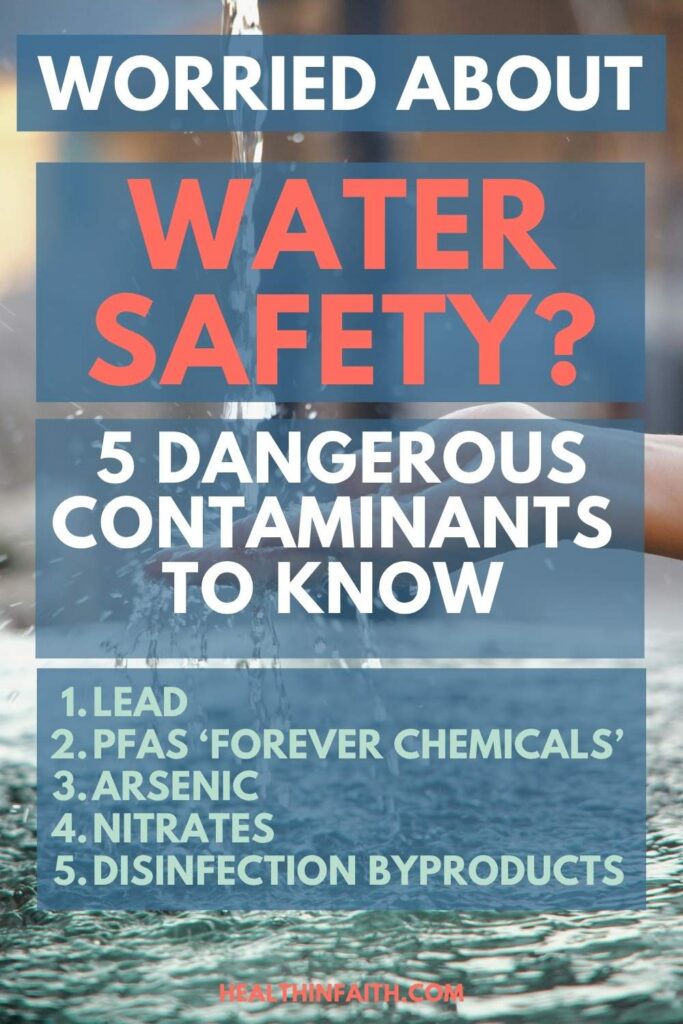
1) Lead — from pipes and plumbing
Lead is one of the most infamous water contaminants, yet it remains a real risk today. Most exposure comes not from the treatment plant but from aging service lines, plumbing, and solder within homes. Lead is a potent neurotoxin. In children, it can disrupt cognitive development and mood. In adults, it may increase blood pressure, stress the kidneys, and contribute to oxidative stress.
What’s alarming about lead is how quietly it works. It’s tasteless and odorless. You may never suspect it’s in your water, yet your body bears the burden, dealing with increased inflammation, mineral imbalances, and liver stress. For someone focused on metabolism, energy, or hormone balance, even low-level chronic exposure can subtly undermine results from otherwise healthy habits.
Practical steps to protect your household:
- Assume risk in older homes: If your home predates the 1980s, there’s a strong chance lead pipes or solder are present.
- Flush before use: Run cold water for a few minutes before drinking or cooking, particularly if it has sat overnight.
- Test your water: Simple test kits or professional assessments provide clarity.
- Choose certified filters: Not all filters remove lead. Look for products certified specifically for lead reduction.
According to the CDC, while many standard filters use activated carbon to remove chemicals and metals, effectiveness depends on the specific filter type and certification[1].
Practical blog-exclusive tip: If you have older plumbing and are looking for immediate relief, consider a faucet-mounted or under-sink lead-certified filter for drinking and cooking water while you plan a longer-term filtration strategy. This small step drastically lowers your daily lead intake without a full plumbing overhaul.
Summary on Lead — High Toxicity + Infrastructure Risk
- Enters water through pipes and plumbing
- No safe exposure level (especially for children)
- Neurotoxic — affects brain, mood, development
Still a major issue because:
👉 it bypasses treatment plants and enters at the home level. Widely regulated, but still one of the most dangerous due to toxicity.
2) PFAS — “forever chemicals”
PFAS, or “per- and polyfluoroalkyl substances,” are known as forever chemicals because they persist in the environment and in our bodies. Get this — PFOA (a type of PFAS) has been categorically linked to cancer: The International Agency for Research on Cancer (IARC) has labelled it a Group 1 Carcinogen (i.e. definitive causation). Worrying hey.
PFAS are found in cookware, food packaging, textiles, and industrial applications, and exposure has become a widespread concern in drinking water.
These chemicals are particularly relevant for people dealing with fatigue, hormone imbalances, or weight management challenges. Research links PFAS exposure to endocrine disruption, immune system interference, and low-grade systemic inflammation[2]. This can leave your energy flat, your gut sensitive, and metabolism sluggish — even if you eat well and exercise.
Not all water filters remove PFAS effectively. A 2023 Duke/Nicholas School study highlighted that reverse osmosis filters reduced PFAS levels by 94% or more, while some activated carbon filters varied widely in effectiveness. Surprisingly, certain whole-house carbon systems even showed increased levels of some PFAS over time[3]. So it’s important to choose your system wisely; the maxim “a little knowledge can be dangerous” applies here. I can certainly help you with this with my free guide: How to Choose the Right Water Filter Without Wasting $300.
Practical steps:
- Consider reverse osmosis or systems specifically certified for PFAS removal for drinking water at least.
- Replace filters on schedule; performance declines with use.
- Monitor whole-house carbon systems carefully, as altering disinfectants can shift microbial dynamics in pipes.
Key Takeaway tip: A point-of-use RO under the sink is a cost-effective way to remove PFAS from your drinking and cooking water while maintaining practical daily use. Many non-RO filters claim to deal with PFAS, but they are only able to reliably remove long-chain PFAS and NOT short chain ones — and filter companies often neglect to say that.
Summary on PFAS — PFAS (“Forever Chemicals”) — Highest Overall Concern
These sit firmly at #1 as the most dangerous water contaminant.
- Found in over 45% of US tap water, and growing
- Detected widely across UK water sources and high-risk sites
- Extremely persistent (build up in body for years)
- Linked to cancer, hormone disruption, immune dysfunction
PFAS are the defining modern contaminant because they combine:
👉 high prevalence + high persistence + systemic health effects
Even regulators acknowledge they are a top-priority emerging threat.
3) Arsenic — naturally occurring in some regions
Arsenic is a naturally occurring metalloid present in groundwater in many regions globally. It’s particularly concerning for households using private wells, where testing and treatment are the homeowner’s responsibility, and in the countryside.
Chronic arsenic exposure is associated with long-term health risks, including liver stress, skin changes, and increased cancer risk. From a detox perspective, arsenic adds a chemical burden that the liver and kidneys must continuously process.
Faithfully stewarding your health doesn’t mean living in fear — it means having clarity and practical action. Testing is the first step and that gives you insight into choosing the correct home filter for you.
Steps to protect your household:
- If you’re on a well, test your water: Annual testing is recommended.
- Choose appropriate filtration: Arsenic removal often requires specific media beyond basic carbon filters.
- Don’t trust taste: Arsenic is tasteless. Clear water doesn’t guarantee safety.
A 2024 review on US drinking water exposure confirms arsenic remains a chronic contaminant of concern even with regulatory protections[4].
A key point to know is that Arsenic comes in two forms:
- Arsenic III (arsenite) → harder to remove
- Arsenic V (arsenate) → easier to remove
Most water filters will not deal with arsenic effectively, especially not Arsenic III and especially not carbon filters. Reverse osmosis is the only filter that reliably removes arsenic and is the gold standard if arsenic is a concern.
Blog-exclusive tip: For homes with private wells, consider dual-media arsenic filters that combine adsorption and sediment removal. This improves both effectiveness and filter longevity.
Summary on Arsenic — Chronic Exposure Risk
- Naturally occurring in groundwater (UK + US)
- Linked to cancer, cardiovascular disease, skin conditions
- Common in private wells and some rural areas generally.
Identified as a key long-term contaminant concern in major reviews.
4) Nitrates — from fertilisers and agricultural runoff
Nitrates commonly enter water supplies via fertiliser runoff and livestock activity. For infants, elevated nitrate levels are linked to methemoglobinemia (“blue baby syndrome”), a serious health concern. For adults, nitrates contribute to low-level chemical stress and may indirectly affect gut and cardiovascular health.
Nitrates reflect a broader reality: our environment has a growing chemical load. The goal isn’t panic — it’s informed action. Knowing your water’s nitrate content allows you to select a filter that will reliably reduce exposure.
Practical steps:
- Test water, especially if using a private well or living near farmland.
- Consider reverse osmosis for nitrate reduction; verify that the system’s specifications match the contaminant profile.
- Balance minerals afterward: Aggressive filtration can remove beneficial minerals, so consider supplementation or remineralization.
Water contamination reviews often highlight nitrates as a persistent issue in both US and UK water quality reports[4].
Blog-exclusive tip: For those using RO systems, add a post-filter remineralisation cartridge to restore beneficial calcium and magnesium, improving taste and supporting mineral balance.
Summary on Nitrates — High Prevalence in Agricultural Areas
- From fertilisers and farming runoff
- Major issue in rural areas and private wells
- Dangerous for infants (blue baby syndrome)
Also consistently listed among core regulated contaminants.
5) Disinfection byproducts (DBPs) like trihalomethanes (THMs)
Disinfection is essential to keep water free from harmful bacteria and viruses. Utilities often use chlorine or chloramine. But when disinfectants react with natural organic matter in water, disinfection byproducts (DBPs) form — including trihalomethanes (THMs) and haloacetic acids.
DBPs are associated with low-level chemical stress and inflammation, which can subtly impact energy, metabolism, and overall health. While public water treatment isn’t the villain, understanding trade-offs helps you make wiser household choices.
Practical steps:
- Taste and odor: If water smells strongly of chlorine, a carbon filter can improve taste and reduce some DBPs.
- Certification matters: Look for filters tested for THM and other DBP reduction, not just “taste improvement.”
- Maintain filters: Removing disinfectants without proper maintenance can lead to microbial growth in pipes.
The CDC emphasizes matching your filtration choice to your goal, whether for taste, odor, or chemical reduction[1].
Blog-exclusive tip: Combine a high-grade carbon filter with a UV post-treatment stage if microbial control and DBP reduction are both priorities. This ensures water is chemically and microbiologically safer.
Summary on Disinfection Byproducts (DBPs – e.g. THMs)
- Formed when chlorine reacts with organic matter
- Associated with cancer risk and long-term toxicity
- Present in most treated water systems
Important because:
👉 they are a direct result of “safe water” treatment itself.
Big Takeaway / Action Step
At first, all of this can seem overwhelming, so let’s make it simple. This week, do two things:
- Check your local water quality report, often available via EWG Tap Water Database or your municipal website. For the UK: Check your water board and look for their ‘water quality report’ in your area. (Bear in mind, the UK database is not as comprehensive and it does not show the unsafe levels in the same helpful way the EWG does, so it needs a bit more interpretation).
Next week, in Part 2, we’ll dive into the remaining five dangerous water contaminants and explore home filtration options that are truly effective and it’ll give you a clear picture of how to go about choosing your best water filter, along with my free Water Guide below.
What to Do Next
If this has opened your eyes to what might really be in your water, remember: small, wise steps compound over time. It’s not just about drinking more water — it’s about what’s in it and whether it’s quietly helping or harming your energy, hormones, and inflammation.
That’s why I created the free guide: “How to Choose the Right Water Filter Without Wasting $300.” Inside, you’ll discover:
- The mistakes most people make when choosing a filter.
- What different systems remove — and what they don’t.
- How to confidently select a solution for your home without overspending.
Download it now and take the first step toward safe, clean water that supports your body and your faith in stewardship.
References
- CDC. Choosing a Home Water Filter.
- EPA. Predicting How Effective Water Filters Are at Removing Variety of PFAS. 2023. EPA Science Matters.
- Duke Nicholas School. Not All Home Drinking Water Filters Completely Remove Toxic PFAS. Duke News.
- Naujokas MF et al., “The Broad Scope of Arsenic in Drinking Water.” PMC Public Access, 2024. NCBI PMC.
💡 This episode is part of Podcasthon 4th edition, supporting charities like Manna Worldwide, bringing clean water, food, education, and the Gospel to communities in Guatemala, the Philippines, Mexico and many others. Visit their website to see what they do and donate to their great work.
Resources, Links & Next Steps
🎁 FREE Guide: How to Choose the Right Water Filter Without Wasting £300 → https://healthinfaith.notion.site/water-filter-guide
🌟 Book a Metabolic Breakthrough Consultation → https://healthinfaith.com/breakthrough
👉 Health for Life – 6 Month Programme → https://healthinfaith.com/hfl
📩 Contact → https://www.healthinfaith.com/contact
🌍 Support clean water and other initiatives with Manna Worldwide Christian Charity → https://mannaworldwide.com/
Remember, clean water is essential to your and your family’s health and that means filtering. Your next step is simple. Download the free guide and choose the right water filter for your home with clarity and confidence.


TUNE IN NOW
Listen to the Health in Faith Podcast