


43 | When You’re Tired of Being Strong — Faith, Fatigue and Fighting Christian Burnout with Lori Owens
Christian burnout is real. I’ve seen many pastors go off with stress and several Christian homeschool moms at the point of breaking, sadly. There comes a point for many women—especially Christian women—where you quietly think to yourself:
“I’m tired of being the strong one.”
You’re still functioning. Still serving. Still showing up for everyone else. But underneath, you feel depleted. Bone-deep tired. Emotionally stretched. Physically worn down. Mentally overloaded.
And perhaps the hardest part is that nobody really sees it.
In this episode of the Health in Faith podcast, I sat down with Lori Owens, host of the Practical Solutions for PTSD podcast, to discuss faith, fatigue, resilience, burnout, PTSD, emotional overwhelm, and the journey back to joy and healing.
This conversation, on how to avoid Christian burnout, felt deeply important.
Because so many Christians today are quietly struggling under the weight of responsibility, chronic stress, trauma, caregiving, ministry pressures, and health issues—trying to hold it all together whilst slowly running on empty.
This conversation offers both practical wisdom and real hope.
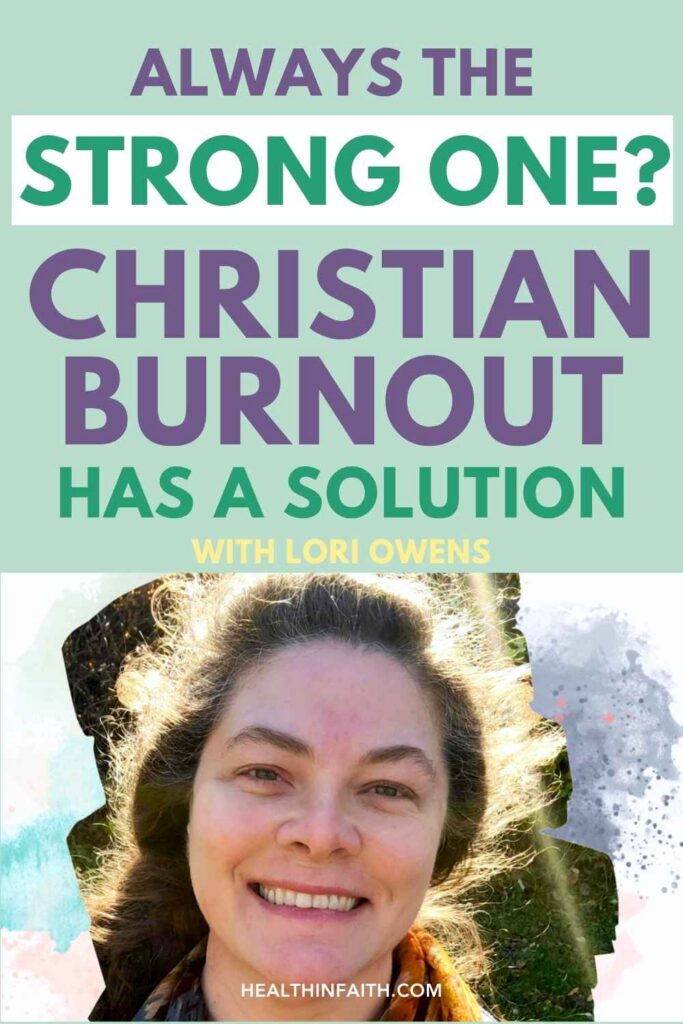
From Army Burnout to Healing from the Inside Out
Lori shared her powerful story of working as a civilian for the United States Army for 16 years, including a highly stressful deployment to Kuwait where she led a complex multinational project under intense pressure.
When she returned home, she didn’t realise at first that she was suffering from severe burnout, PTSD, chronic stress, and significant health issues connected to prolonged stress exposure.
One moment particularly stood out to me.
After returning home, Lori sat with a doctor hoping primarily to lose the weight she had gained during that stressful period. Instead of focusing on weight loss, the doctor looked her in the eye and said:
“You need to focus on healing from the inside out before you focus on weight loss.”
What wise advice.
And in many ways, this perfectly mirrors what I see in my own work with Christian women struggling with fatigue, stubborn belly fat, brain fog, inflammation, and emotional eating.
Often, the issue isn’t simply calories or exercise.
The deeper issue is stress physiology, nervous system dysregulation, trauma overload, inflammation, poor metabolic health, gut dysfunction, and emotional depletion.
Christian Burnout — The Link Between Chronic Stress and Physical Health
One of the most fascinating aspects of Lori’s story was hearing how deeply connected her physical and emotional health became.
She explained how healing began through:
- Improving nutrition
- Supporting gut health
- Reducing toxic burden
- Emotional counselling
- Gradual nervous system healing
- Learning resilience skills
- Restoring joy and purpose again
This is hugely important because modern research strongly supports the connection between chronic stress and physical disease.
Studies show prolonged stress can contribute to:
- Increased cortisol
- Weight gain around the abdomen
- Immune dysfunction
- Gut permeability (“leaky gut”)
- Anxiety and depression
- Blood sugar dysregulation
- Fatigue syndromes
- Inflammation
Research published in Nature Reviews Endocrinology highlights that chronic stress disrupts metabolic health and significantly affects immune and hormonal function (Chrousos, 2009).
And this is why so many women feel simultaneously:
- Exhausted
- Inflamed
- Foggy
- Overwhelmed
- Emotionally fragile
- Unable to lose weight
Their bodies are not failing them.
Their bodies are waving distress signals.
Why Gut Health Matters for Mental and Emotional Health
One thing Lori spoke about extensively was healing her gut. She discovered what many researchers now recognise: the gut and brain are deeply interconnected.
This is often referred to as the “gut-brain axis.” The gut microbiome communicates constantly with the brain through:
- Neurotransmitters
- The vagus nerve
- Immune pathways
- Hormonal signalling
In fact, around 90% of serotonin is produced in the gut.
Research published in Nature Reviews Gastroenterology & Hepatology confirms the powerful role gut health plays in anxiety, mood regulation, stress resilience, and cognitive function (Cryan et al., 2019).
This is one reason I so often focus on gut health with clients struggling with:
- Brain fog
- Anxiety
- Fatigue
- Emotional eating
- Chronic inflammation
You cannot fully separate physical health from emotional and spiritual wellbeing.
We are integrated beings—body, mind, and spirit.
What Is Resilience (Really)?
One of my favourite parts of the conversation was our discussion around resilience.
Since 2020 especially, many people have realised they are not nearly as resilient as they once thought. Lori defined resilience beautifully:
“Resilience is the capacity to come back and thrive after hard times.”
Not simply surviving.
Thriving again.
Finding joy again.
Learning how to function without being constantly overwhelmed.
This is so encouraging because resilience is not something you either have or don’t have.
It can be developed.
Some of the key resilience tools Lori highlighted included:
- Healthy boundaries
- Nervous system regulation
- Gratitude practices
- Emotional processing
- Learning coping strategies
- Rest
- Leaning into who God created you to be
That final point really struck me.
God Didn’t Make a Mistake When He Made You
Lori shared a deeply moving story about praying during her time in Kuwait, feeling flawed and wishing she were different. And she sensed the Lord gently saying:
“I like you just the way you are.”
That is powerful. So many women I work with constantly compare themselves to others:
- “I should be stronger.”
- “I should cope better.”
- “I should be more disciplined.”
- “I wish I was more like her.”
But God created each of us uniquely.
And often the very traits we see as weaknesses become strengths when surrendered to Him.
This ties beautifully into Psalm 139:
“I will praise thee; for I am fearfully and wonderfully made.”
“I’m Tired of Being the Strong One”
At one point in the interview, I shared something a client had recently said to me:
“I’m tired of being the strong one.”
That sentence has stayed with me.
Because I think it describes so many Christian women today.
The caregivers.
The ministry leaders.
The mothers.
The grandmothers.
The business owners.
The church volunteers.
The women everyone else relies on.
Lori’s response was deeply compassionate.
She explained that reaching this place is not weakness—it is often your body signalling that you have reached your limit and boundaries are needed.
And she said something profoundly important:
“Counterintuitively, doing less will actually help you do more in the long run.”
That is wisdom many of us desperately need.
The Importance of Boundaries for Christian Health
As Christians, we often struggle with boundaries because we associate them with selfishness.
But boundaries are not selfish.
They are stewardship.
Lori used the example of preparing a car for a long journey. If your family depends on that car, you service it. You protect it. You maintain it.
Why? Because if it breaks down, everybody suffers. The same is true for us.
If everybody depends on you, then it becomes even more important that you take care of yourself.
That includes:
- Rest
- Proper nutrition
- Emotional support
- Boundaries
- Stress management
- Sleep
- Nervous system regulation
This is really wise advice.
A Simple 3-Step Framework for Emotional Overwhelm
Lori also shared a brilliant practical framework for managing overwhelm.
1. Dial Back the Pressure
Instead of trying to change everything, identify just one responsibility and ask:
- Is this still mine to carry?
- Can someone else help?
- Do I need to release this?
This alone can bring enormous relief.
2. Practice One Moment of Gratitude
Even during difficult seasons, intentionally noticing one good thing helps regulate the nervous system and interrupts negative spirals.
Research consistently shows gratitude practices improve emotional resilience and mental health (Emmons & McCullough, 2003).
3. Take One Forward Step
This was perhaps my favourite practical takeaway.
Not ten steps.
Not a huge overhaul.
One small step.
One email.
One healthy meal.
One short walk.
One serving of vegetables.
Progress is still progress.
And small consistent actions create transformation over time.
Blog Bonus Insight: Why Trauma Often Shows Up in the Body
Something I wanted to add here that we didn’t fully unpack in the interview is this:
Trauma is not just stored mentally. It is often stored physically too.
Many people living under chronic stress unconsciously remain in “fight or flight” mode for years.
This affects:
- Digestion
- Hormones
- Sleep
- Blood sugar
- Inflammation
- Muscle tension
- Breathing patterns
- Appetite regulation
This is why people dealing with chronic stress often simultaneously experience:
- Belly fat
- Sugar cravings
- Exhaustion
- Anxiety
- Gut issues
- Brain fog
The nervous system and metabolism are deeply connected.
And healing often requires both spiritual and physical restoration together.
Final Encouragement
If you are tired of being the strong one…
If you feel emotionally exhausted, physically depleted, or quietly overwhelmed…
Please hear this: You are not failing. And you do not need to keep pushing harder.
Sometimes healing begins not through striving—but through wisdom, boundaries, nourishment, rest, and allowing God to rebuild you gently from the inside out.
There is joy again on the other side of burnout.
There is healing after chronic stress.
And there is still purpose ahead for you. 😊 ✝️
Resources Mentioned
🎁 FREE 4-Step Metabolic Health Guide for Christians
🎙️ Practical Solutions for PTSD Podcast by Lori Owens
References
- Chrousos, G. P. (2009). Stress and disorders of the stress system. Nature Reviews Endocrinology.
- Cryan, J. F. et al. (2019). The microbiota-gut-brain axis. Nature Reviews Gastroenterology & Hepatology.
- Emmons, R. A., & McCullough, M. E. (2003). Counting blessings versus burdens. Journal of Personality and Social Psychology.


TUNE IN NOW
Listen to the Health in Faith Podcast